

Why Artistic Nude Photography Still Matters | The Musings Project
Every few years, someone predicts the death of artistic nude photography.
Sometimes the argument is that nudity has become too common to be interesting.
Sometimes it's that pornography has made the genre irrelevant. More recently, it's that artificial intelligence can generate any image imaginable without ever picking up a camera.
Yet somehow, people continue making photographs. People continue looking at them. And the images that stay with us are still the ones that feel human.
That has always been the point.

Long before I ever photographed a nude subject, I was drawn to photographers who understood that a camera could do more than document appearances.
I studied the work of Avedon, Demarchelier, Meisel, and Von Unwerth. Later I discovered photographers like David Bellemere, Sante D'Orazio, and others who approached glamour photography as something more than a catalog of attractive bodies.
At the same time, I found publications that treated sensuality differently than most mainstream men's media. I was particularly drawn to the 2016–2018 revival of Playboy and magazines like Lui. Those publications weren't perfect, and they certainly weren't universally loved, but they felt refreshingly human to me.
The photographs breathed. The women looked like people rather than products. The images felt less concerned with perfection and more interested in personality, atmosphere, style, and presence.

That distinction mattered. Because despite what many people assume, artistic nude photography has never really been about nudity for me.
Nudity is simply the absence of clothing. The photograph still has to be about something.
Confidence. Vulnerability. Strength. Curiosity. Playfulness. Self-discovery. Identity.
Without those things, nudity quickly becomes uninteresting.
One of the reasons I believe artistic nude photography remains important is because clothing often functions as a form of visual shorthand.

Fashion is powerful. I love fashion photography and continue to shoot it regularly. But clothing immediately communicates status, culture, profession, subculture, wealth, trends, and identity markers before we ever begin to understand the person wearing it.
Remove those layers, and something changes. The viewer is forced to engage differently. The photographer is forced to work harder. And often the subject reveals something they didn't expect to reveal.
Not because they're naked. Because they're present.

That process becomes even more important in a culture increasingly dominated by performance. Social media has encouraged all of us to become our own publicists. We learn which photographs generate engagement. We learn which angles are flattering. We learn how to present a version of ourselves optimized for approval. Eventually the performance can become difficult to separate from the person.
The best portrait photography pushes in the opposite direction. Not toward exposure, but toward honesty. Sometimes that honesty is glamorous. Sometimes it's powerful. Sometimes it's playful. Sometimes it's uncomfortable. But it's real.

Artificial intelligence presents a different challenge. AI can generate technically flawless images in seconds. It can create perfect skin, perfect lighting, perfect bodies, perfect locations, and perfect styling.
What it cannot create is a real interaction between two human beings. It cannot create trust. It cannot create collaboration. It cannot create the moment when a subject stops posing and simply exists in front of the camera.
Those moments still matter. In many ways, they matter more now than they ever have.
Every woman featured in The Musings Project is a real person. She has her own history, personality, insecurities, strengths, experiences, and perspective.

The photographs we create together are not generated from a prompt. They are built through conversation, trust, collaboration, experimentation, and interpretation.
The resulting images are not objective truth. Photography never is. Every frame is influenced by my perspective as a photographer. The location, the styling, the lighting, the composition, the timing, the edit—those choices are mine.
But the person in front of the camera is real. The interaction is real. The connection is real. And that reality is becoming increasingly valuable. Artistic nude photography is not important because it shows naked people. The internet has no shortage of that. It remains important because it gives us an opportunity to see people differently. To slow down. To observe. To interpret. To connect. To recognize beauty as something deeper than appearance alone.
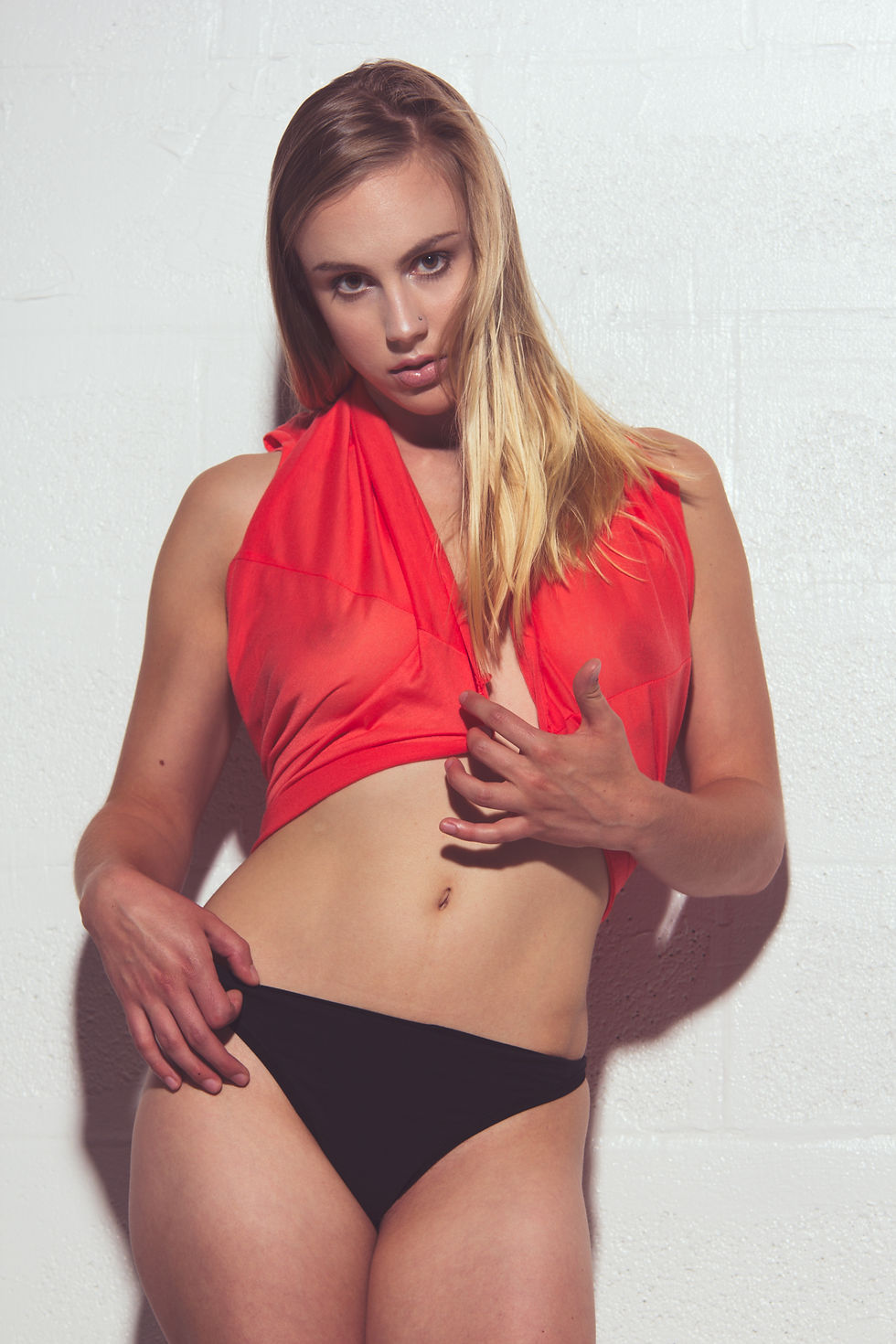
That's why I continue creating this work. Not because nudity is provocative. Not because controversy attracts attention. Not because algorithms reward it. But because every so often, a photograph reveals something true about another human being.
And those are still the images worth making.


Comments